
 Dolls · Parts · Custom help
Too narrow blocks arms and posing
BJD clothing fit checklist
BJD body measurements for clothes, shoes, and outfit sourcing.
BJD clothes should be sourced by body measurements, not only by 1/3, 1/4, or 1/6 labels. Use this checklist before requesting a source quote.
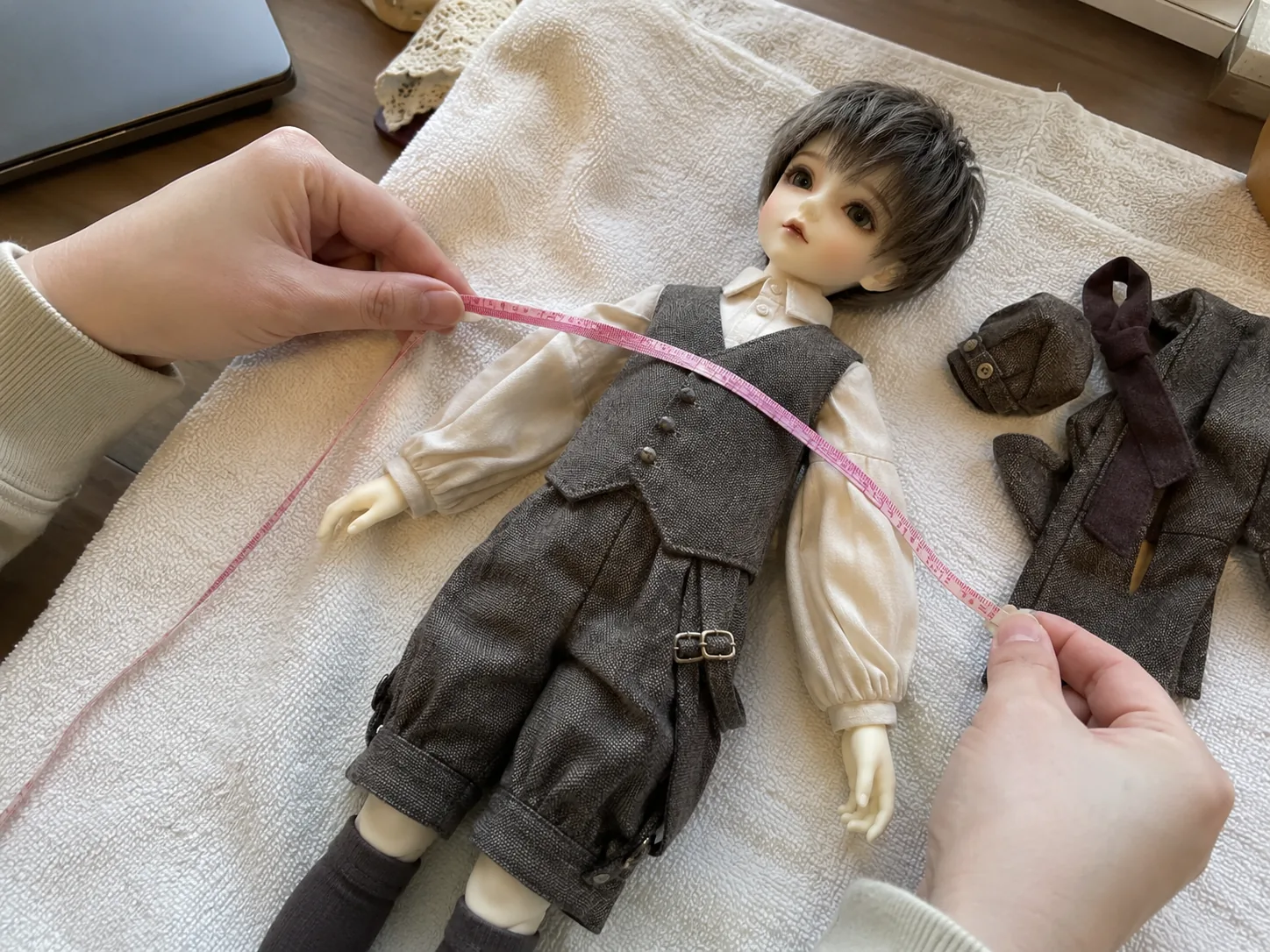
Use this before sourcing parts.
Guide ranges cannot establish the specifications of an individual item.
Most common mismatch point
Check sitting and posing allowance
Avoid sleeves covering hands or pulling at elbows
Scale labels alone are unreliable
Before matching, check the details
Male, female, slim, and mature bodies differ
- Two bodies with the same height can have different shoulder, chest, and hip measurements.
- Layered clothes need more allowance than thin single-piece outfits.
- Shoes need foot length and sometimes ankle shape, not just scale.
Use measurements as order memory
- Keep measurements attached to the inquiry so future sourcing is faster.
- Ask for seller size charts before buying expensive outfits.
- Use arrival photos and fit notes to improve the next quote.
Ready to check the fit?
ⓘ Other families need different checks. Cotton dolls: check height, body type and outfit opening. Larger sizes: check footprint, support and packing route.
Frequently asked questions
What measurements do I need for BJD clothes?
Start with shoulder, chest or bust, waist, hip, sleeve length, outfit length, and foot length for shoes.
Are 1/3 BJD clothes universal?
No. SD, slim, mature, male, and female bodies can all differ inside the 1/3 class.
Can CMDOLL check clothes fit before ordering?
Yes. Send the body measurements, outfit link, target style, and destination.